A programming note: We are observing Memorial Day on Monday, so you will next receive the SCOTUStoday newsletter on Tuesday.
At the Court
On Thursday, the Supreme Court released its decisions in Havana Docks Corporation v. Royal Caribbean Cruises and M&K Employee Solutions v. Trustees of the IAM National Pension Fund. It also dismissed Hamm v. Smith as improvidently granted.
- In Havana, the court, by a vote of 8-1, ruled in favor of a U.S. business that, in a lawsuit against several cruise lines, is seeking to recover for its losses under a 1996 law that targets the Cuban regime. Justice Clarence Thomas wrote the majority opinion, and Justice Elena Kagan penned a rare solo dissent.
- In M&K, a unanimous court held that ERISA provisions governing the calculation of withdrawal liability from an underfunded multiemployer pension plan do not require that actuaries use assumptions adopted prior to the measurement date. Justice Ketanji Brown Jackson authored the opinion of the court.
- In Hamm, the court considered how and whether to assess a claim under Atkins v. Virginia (which prohibited the execution of people who are intellectually disabled) when a defendant has taken multiple IQ tests. The vote was effectively 5-4, with Justices Thomas, Samuel Alito, and Neil Gorsuch and Chief Justice John Roberts opposing the decision to dismiss the case as improvidently granted.
After the opinion announcements, the justices met in a private conference to discuss cases and vote on petitions for review. Orders from Thursday’s conference are expected on Tuesday at 9:30 a.m. EDT.
Also on Thursday, the court denied three additional requests for a stay of execution from Tony Carruthers, whose previous request was denied on Tuesday. Tennessee began his execution, but called it off after officials failed to find a vein.
The court also denied two requests for a stay of execution from Richard Knight, who was sentenced to death in 2006. Knight was executed in Florida hours later.
The court has indicated that it may announce opinions on Thursday, May 28, at 10 a.m. EDT. We will be live blogging that morning beginning at 9:30.
Morning Reads
House Democrats take on the Supreme Court shadow docket
Benjamin S. Weiss, Courthouse News Service
On Thursday, Rep. Jamie Raskin, a Democrat from Maryland, “unveiled a package of legislation he said would shine a spotlight on the Supreme Court’s shadow docket and demystify the justices’ secretive and often unexplained emergency orders,” according to Courthouse News Service. The legislation “would attempt to address the opaque nature of the shadow docket by requiring the Supreme Court to issue public legal justification for orders issued from the emergency pool within seven days.” “Courts don’t lose authority when they explain themselves – that’s where their legitimacy comes from,” Raskin said to Courthouse News Service.
Trump fires warning shot at SCOTUS as major citizenship showdown looms: ‘It will be a disaster’
Ashley J. DiMella, Fox News
Speaking Thursday from the Oval Office, President Donald Trump predicted a loss for his administration in the Supreme Court’s birthright citizenship case, which addresses his “January 2025 executive order seeking to limit automatic citizenship for some children born in the U.S.” Such a ruling “would be a disgrace,” the president said, adding that the justices will “probably rule against me because they seem to like doing that.” “You know, frankly, I’m not happy with some of the decisions,” Trump said.
Gun activists ask Supreme Court to block Maryland’s ban on firearms at ‘sensitive places’
Stephen Dinan, The Washington Times
In a petition for review filed this week, a “coalition of gun-rights groups has asked the Supreme Court to step in and block a Maryland law that bars even concealed-carry permit holders from carrying firearms at ‘sensitive places’ such as state parks, museums and mass transit,” according to The Washington Times. The groups contend that “the heart of the Second Amendment’s right to bear arms is personal protection” and that “states can abridge that right in locations only when the state itself provides armed guards and screening, such as a courthouse.”
An Early Look at Scalia-Ginsburg Friendship
Ed Whelan, Confirmation Tales
In a post for his Substack, Ed Whelan revisited “the remarkable story” of how Patrick Schiltz, who is now chief judge for the U.S. District Court for the District of Minnesota, came to clerk for then-Judge Antonin Scalia, which involved a “non-interview interview” and a competing offer from then-Judge Ruth Bader Ginsburg. Schiltz told Whelan that, upon learning of Ginsburg’s offer, Scalia “spoke highly of her, and told me I could not go wrong” with either job. When Schiltz told Scalia that he “wanted to clerk for him” but was worried about insulting Ginsburg, Scalia helped him deliver the news. “He picked up the phone, called Judge Ginsburg, and said: ‘Ruth, I’ve got Patrick Schiltz in my office. I told him that he can’t leave until he accepts my offer. He has a plane to catch, so he accepted. Blame me,’” Schiltz recalled, adding that he “could hear her on the other line telling Judge Scalia that she thought” Scalia and Schiltz “were a great match.”
On Site
From the SCOTUSblog Team

Court sidesteps death-row IQ dispute
The Supreme Court on Thursday left in place a ruling by a federal appeals court in favor of an Alabama man who has been on that state’s death row for more than two decades. In a one-sentence, unsigned order, the court dismissed Alabama’s petition for review in Hamm v. Smith as “improvidently granted” – that is, without deciding it. That order leaves undisturbed a ruling holding that Joseph Smith is intellectually disabled and therefore cannot be executed.
Opinion Analysis
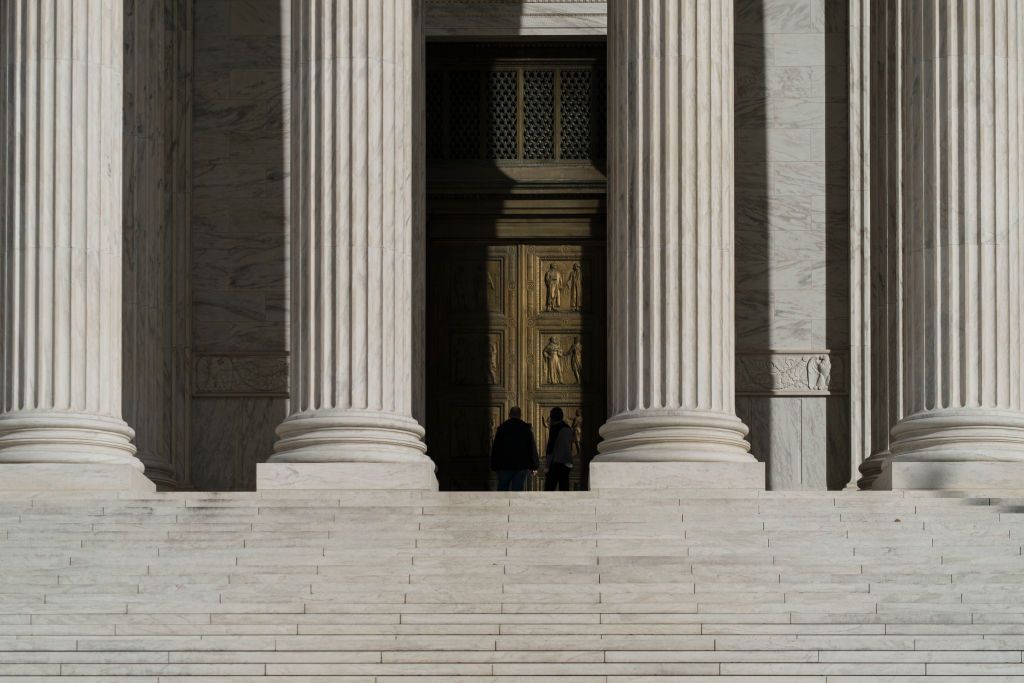
Court rules against cruise lines in Cuban confiscation case
More than 65 years after the confiscation by Cuba’s communist government of assets owned by U.S. businesses there, the Supreme Court on Thursday ruled in favor of a U.S. business that is seeking to recover for its losses under a 1996 law that targets the Cuban regime. By a vote of 8-1, the justices ruled that Havana Docks, a U.S. company that before 1960 had owned a right to use and operate the docks in the port of Havana, is potentially entitled to receive hundreds of millions of dollars for the use of the port by cruise lines between 2016 and 2019, even if the company’s control of the docks would have expired in 2004.
From the SCOTUSblog Team
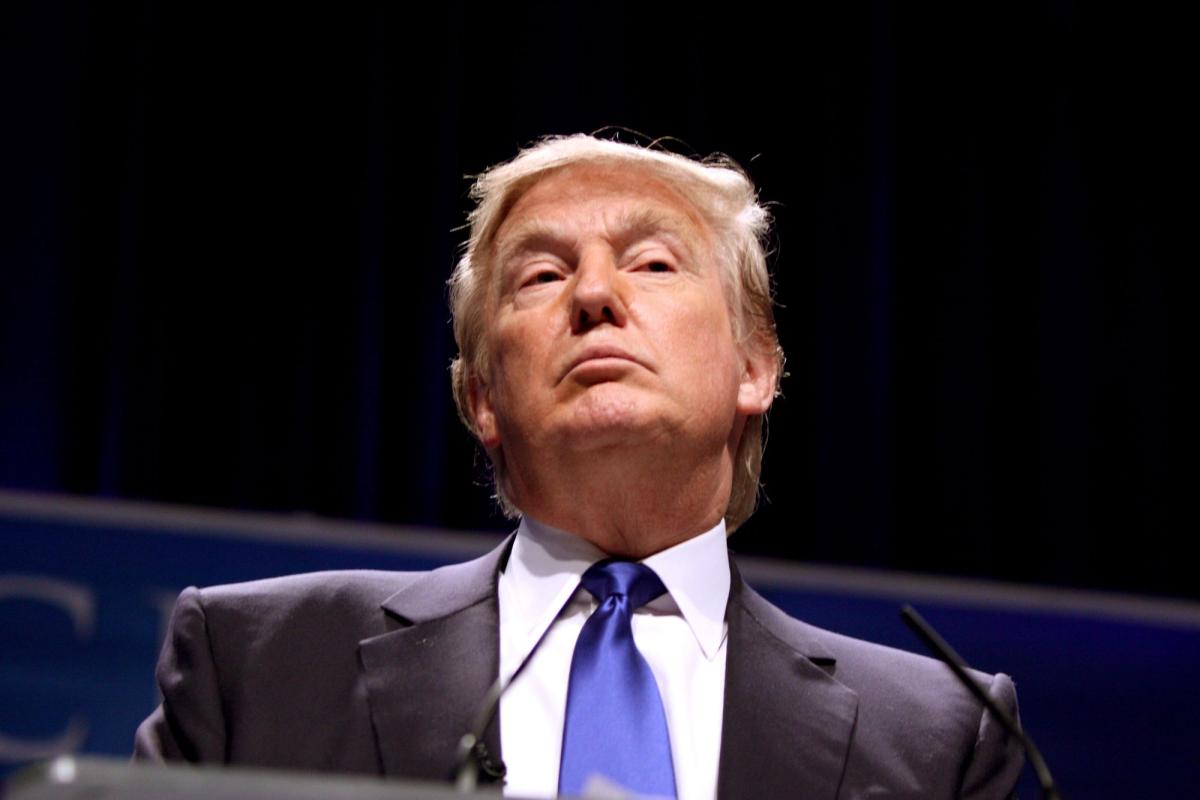
Court puts off deciding whether to consider $5 million verdict against Trump – yet again
A high-profile petition for review from President Donald Trump asking the court to review the $5 million jury verdict against him in a sexual abuse and defamation case filed by journalist E. Jean Carroll has been fully briefed since January. It was originally scheduled for a February conference, but the justices have rescheduled it 11 times this winter and spring. There is no way to know what is going on behind the scenes, but the delay may be related to a separate defamation case involving Carroll.
Podcasts
Advisory Opinions
All the Things Wrong with Trump’s Billion-Dollar Fund
Sarah Isgur and David French analyze President Donald Trump’s $1.776 billion “anti-weaponization” fund through the lens of three legal “buckets,” and talk about how federal appropriations work and the Obama-era case that hangs over this legal issue.
A Closer Look
Justice Ketanji Brown Jackson speaks
Coverage of Justice Ketanji Brown Jackson’s Monday night remarks in Washington primarily focused on her critiques of the court’s decision to immediately finalize its ruling in the Louisiana redistricting case and her concerns about the court appearing partisan in an election year. And while those may have been the most newsworthy things she said, Jackson also spoke on her upbringing in Miami, the “crazy” environment that came with her Supreme Court appointment, and why she believes Justice Stephen Breyer offered her a clerkship.
The conversation, moderated by U.S. District Judge Richard Gergel at the American Law Institute’s annual meeting, opened with Jackson reading from the preface of Lovely One, her memoir published in 2024.
From there, Jackson walked the audience through her family’s story (“a family of strivers,” she called them) with the help of a slideshow of photographs, pausing on images of her grandparents, who migrated from Georgia to Miami in 1939 in search of greater opportunity. Jackson explained that her grandfather started a gardening business and put all five of his children through college. “He knew that that was going to be the key,” Jackson said, “Making that investment in education was going to be the way in which our family would be able to survive and improve.” She also described how her aunt, who was working as a missionary in West Africa when Jackson was born, sent a list of African names to her mother, from which her mother chose the name Ketanji Onyika, meaning “lovely one.”
Jackson then explained that, while she was still a child, her father made a mid-career change from teaching history in D.C. to attending the University of Miami Law School. “I actually never thought you could do anything other than be a lawyer,” Jackson said. “Because that’s what I knew, you know, when you grow up on the campus of a law school, education becomes what you know, law became what I was interested in from that young.”
Prompted by Gergel, Jackson added that her father eventually became the lawyer for the school board for the Dade County Public School district, and that is what she and Breyer connected over during her clerkship interview. “I am to this day convinced I got the interview or got the job with Justice Breyer because Justice Breyer’s father was the lawyer for the school board in San Francisco. And he was so excited when he heard that, he thought he had something in common with me.”
Jackson also shared a story from her memoir about a defining moment in high school, when a store clerk followed her around a shop while her white classmates moved freely. She described going home to her grandmother, who urged her not to let it define her. “And don’t let them get inside you,” her grandmother told her.
When asked what life had been like since her nomination to the court, Jackson said that “it’s only been four years that I’ve been on the court and it’s like overnight your life changes. … You go from being a relatively anonymous judge in the world to being someone that people recognize.”
When the conversation turned to the court’s emergency docket – a concern Jackson has raised before, including during a lecture at Yale Law School earlier this year – she reprised her criticism of the court increasingly intervening in cases still pending before lower courts, often without full briefing or argument. She proposed two remedies: a threshold requirement of genuine urgency before intervention, and a reordering of the factors the court applies, putting irreparable harm ahead of likelihood of success on the merits.
Perhaps her most pointed comments came when Gergel raised Louisiana v. Callais, the Voting Rights Act case. Jackson talked about dissenting from the court’s decision to shorten its standard 32-day waiting period before finalizing the ruling, and said the court had deviated from that practice over a party’s objection only two or three times in roughly 25 years. As USA Today reported, Jackson said the court has “to be really, really careful in this environment when we’re dealing with issues that have a political overlay,” and that “public confidence is really all the judiciary has.”
Asked finally about her many dissents, Jackson said that she agreed with her colleague Justice Ruth Bader Ginsburg, who “said that dissents are really written for a future age, that they lay down a marker for the future.” “Dissents, I think, are one of the most extraordinary aspects of the American legal tradition, because they actually embody one of our core values, the idea of freedom of expression and tolerance of minority views,” Jackson added. “This is something that is integral to who we are as Americans, and we have a practice that allows for that.”
SCOTUS Quote
JUSTICE SCALIA: “What is the ambiguity we are talking about?”
MR. HALLWARD-DRIEMEIER: “Well, the ambiguity – I actually think there is no ambiguity because –”
JUSTICE SCALIA: “What is the non-ambiguity we are talking about?”